


Methane (CH4) Analysis by GasBench-Precon-IRMS Tips
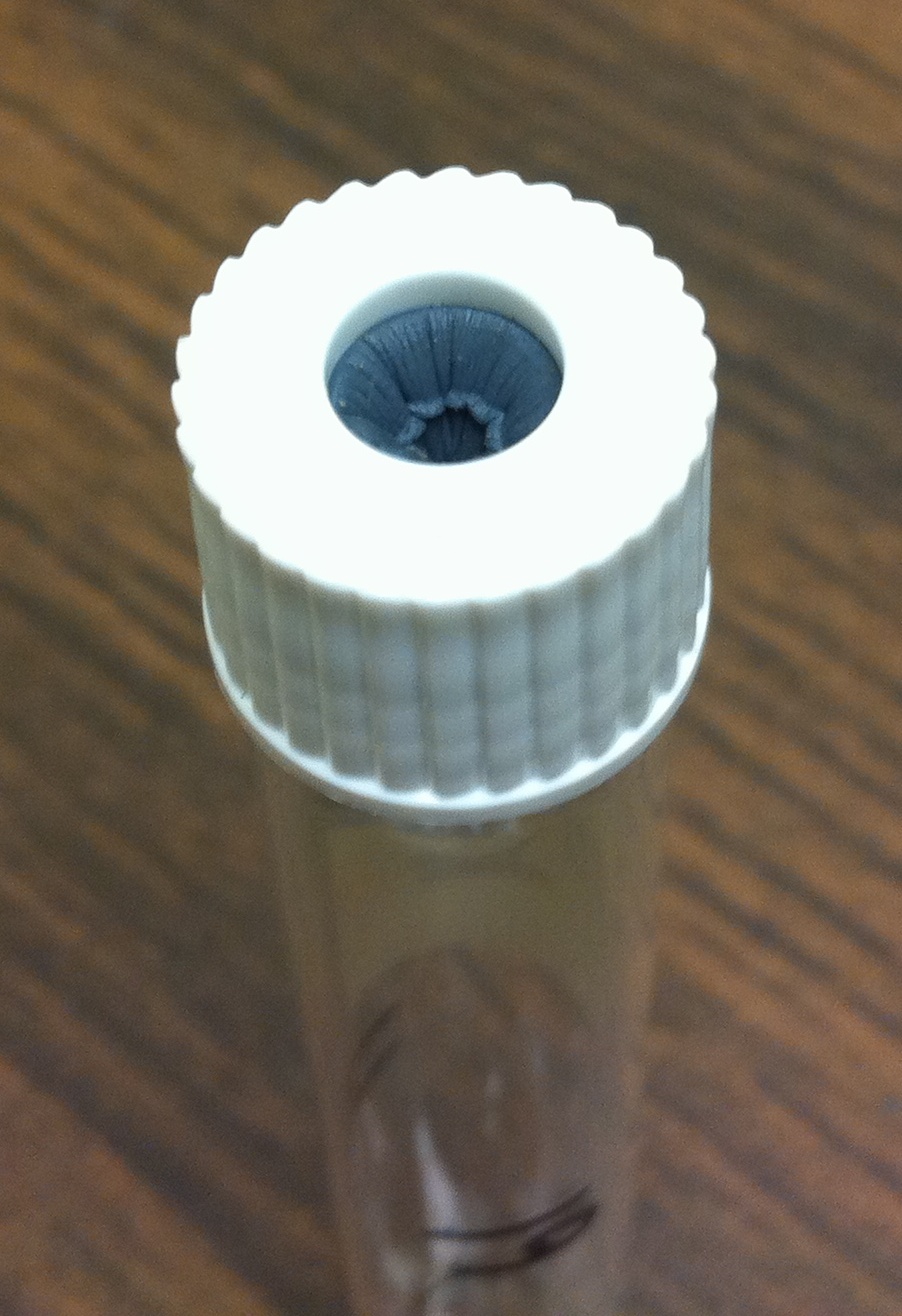 1) If requesting both 2H and 13C in CH4, two separate vials are required as the isotopes are analyzed separately. If sending water samples for CH4, a minimum of 12 mL water is required for each isotope.
2) Avoid over-tightening vial caps. Vials will leak when caps are over-tightened, causing the septa to pucker and pull away from the vial. Turn caps until snug, but not so far that the septa start to pucker.
3) Do not apply silicone grease, adhesives, or sealant to the tops of the vials. These materials clog the autosampler needle. The process of removing these sealants increases the risk of losing your gas sample due to dislodged septum.
4) Gas vials should be free of particulate matter or slurries, as the particles will clog our autosampler needle.
Shipping
Carefully package groups of Exetainers in Ziplock bags, small boxes, or their original boxes with dividers. Then package these sets in a larger sturdy box with Styrofoam peanuts or bubble wrap. Make sure the samples are very secure, loose vials can shatter during shipping. These gas samples do not require refrigeration during shipping. Coolers will not be returned.
Please complete and submit the online Analysis Order Form and Sample List for your samples. Also, be sure to include a printed copy with your samples. The SIF uses this form to track your samples and to contact you regarding receipt of samples, data, and invoicing. For mixed analysis requests, we require completing a separate form for each type of analysis.